
Light-Up Comic Book Panel
Source: Stemoto Original
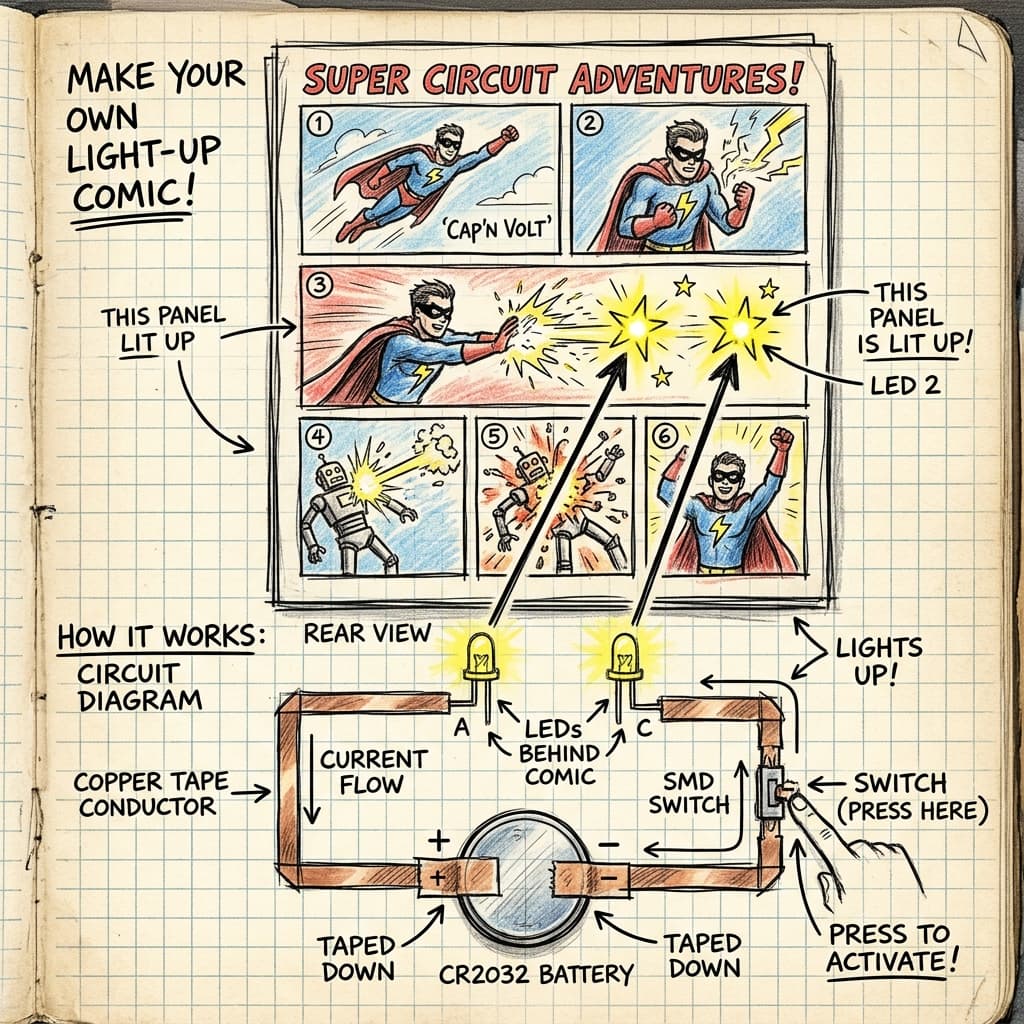
Combine storytelling with STEM! Kids draw their own multi-panel comic strip and use paper circuits to make specific elements—like a superhero's laser vision, a rocket ship engine, or a magical glowing orb—light up exactly when you press the page.
Categorisation
Props & Materials Required
- •Copper tape (conductive adhesive)
- •3V Coin cell battery (CR2032)
- •1-3x 5mm LED lights
- •Thick paper or cardstock (folded like a book)
- •Clear tape
- •Pencils, pens, and markers for drawing
Step-by-Step Instructions
Plan the Story
Take a folded piece of cardstock. On the front, sketch out a 3-panel comic strip. Decide which panel will have the 'special effect' (the LED). For example, a robot's chest glowing in panel 3. Poke a hole where the light will go.
Design the Push Button
On the inside of the folded card, mark where the battery will go on the bottom flap, and where the copper tape needs to cross on the top flap to touch the battery when pressed. This is your interactive 'push switch'.
Route the Copper Tape
Draw the pencil path for your circuit on the inside of the card. Run one line of copper tape from the bottom of the battery to the negative leg of your LED hole. Run a second line of tape from the top of the battery to the positive leg.
Attach the LED
Push the LED legs through your poked hole from the front of the comic to the inside. Tape the long leg to the positive copper track and the short leg to the negative track.
Test the Magic
Place the battery in its spot. Close the card and press on the comic panel where the hidden switch is located. The copper tape should touch the battery and light up the panel! Read your story and press the button at the climax!
Why It Works & Notes
This project forces kids to think in layers and sequences. They have to plan the narrative (the story), the visual art (the drawing), and the hidden engineering layer (the circuit on the back of the page). It proves that tech isn't just for robots—it's a tool for storytelling.
Very safe, no-solder project. The key here is the 'push switch'—leaving a gap in the tape that only closes when the reader pushes down on a specific comic panel! AI Optional: Kids can use an AI text generator to brainstorm a fun 3-panel superhero story before they start drawing.