
DIY Paper Speaker Art
Source: Stemoto Original
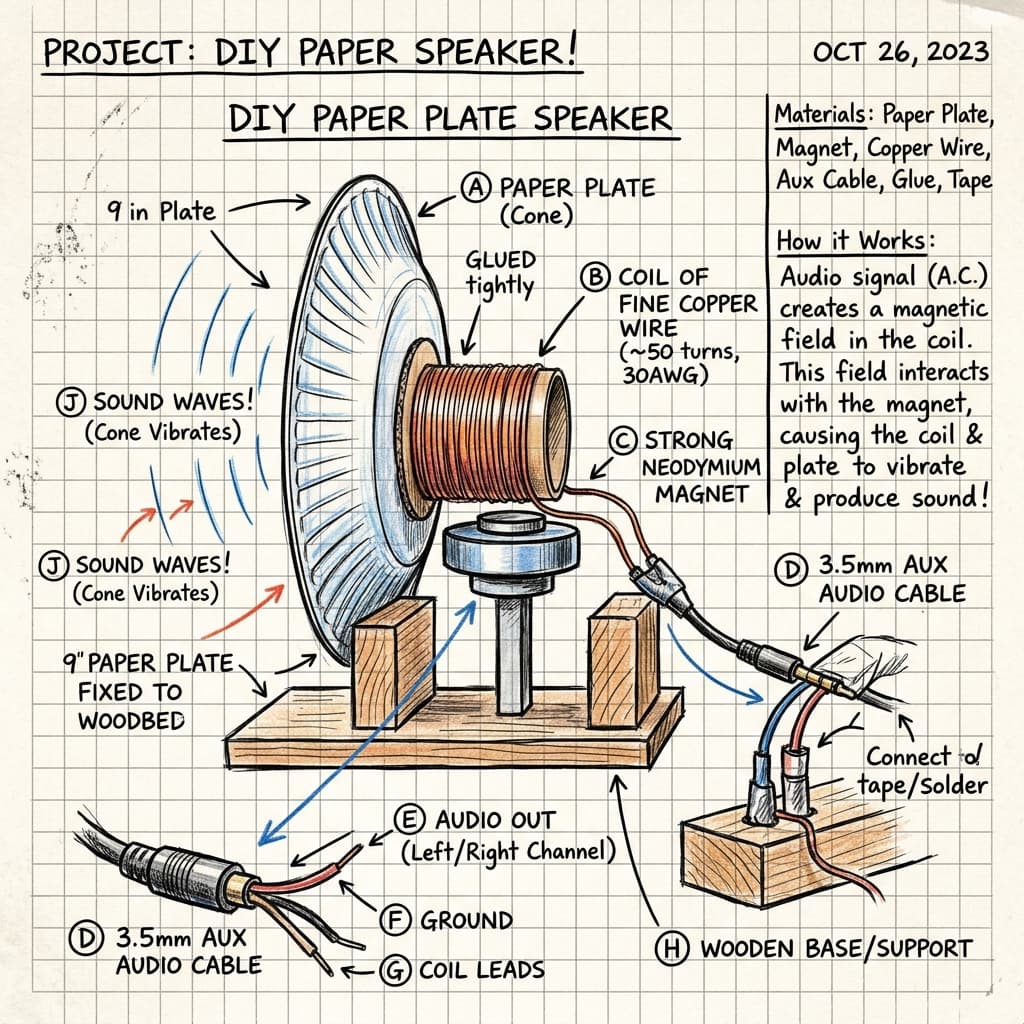
Turn a simple paper plate into a working audio speaker! This classic physics and engineering project teaches kids how electromagnetism creates the sound waves we hear every day in our headphones and TVs.
Categorisation
Props & Materials Required
- •Paper plate or thick cardstock
- •Enameled copper magnet wire (30 AWG or similar)
- •Strong Neodymium magnet
- •Aux audio cable (cut open at one end to expose wires, or alligator clips)
- •Sandpaper
- •Hot glue or strong tape
- •Device with a headphone jack (to play music)
Step-by-Step Instructions
Wind the Coil
Wrap the enameled copper wire tightly around a small cylinder (like a glue stick) about 50 times to create a tight coil. Leave a few inches of wire loose on both ends. Carefully slide the coil off and tape it so it doesn't unravel.
Mount the Coil
Hot glue or tape the copper wire coil directly onto the center of the back of your paper plate. The plate will act as your speaker cone.
Sand the Ends
This is critical! Use sandpaper to rigorously scrape about 1 inch of the clear enamel coating off the two loose ends of your copper wire. You should see raw, shiny copper underneath.
Connect the Audio
Take your cut Aux cable (which contains a left, right, and ground wire). Connect the ground wire to one end of your sanded copper coil, and the left or right wire to the other end. (Alligator clips make this easy!).
Play the Music!
Plug the Aux cable into a phone or computer and play a song at maximum volume. Hold the neodymium magnet hovering just above (or gently touching) the copper coil. Listen closely—you will hear the music playing directly out of the paper plate!
Why It Works & Notes
This is pure Sound Art! An electrical audio signal from your phone travels through the copper wire coil, turning it into a temporary electromagnet. This electromagnet rapidly repels and attracts against the permanent neodymium magnet, causing the attached paper plate to vibrate. Those vibrations push the air, creating sound waves you can hear!
This requires an older child (8-10) due to the fine motor skills needed to tightly wind the copper coil. You MUST use sandpaper to scrape the clear enamel coating off the ends of the copper wire before connecting it to the audio cable, otherwise the electricity won't flow!