
Color-Mixing Light Box
Source: Stemoto Original
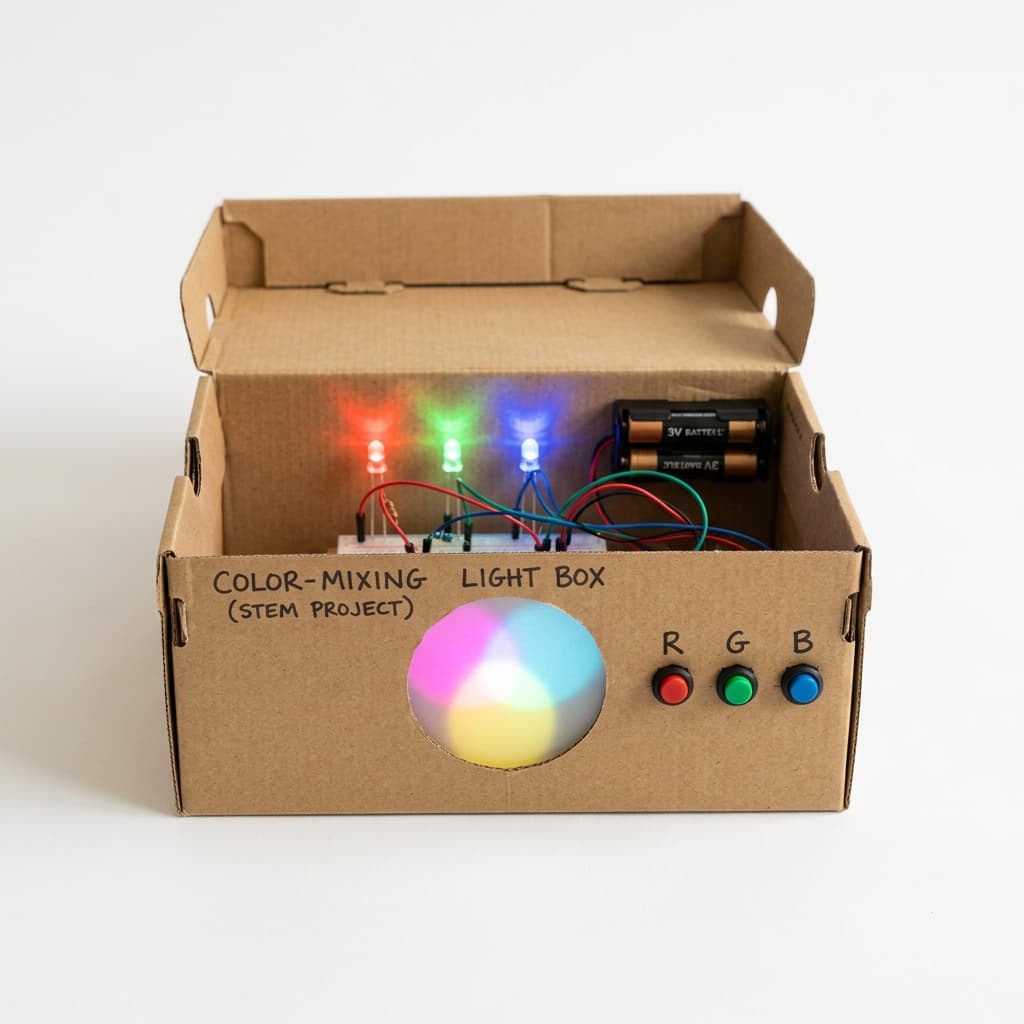
Explore the physics of light! Build a shadow box with three separate switches that control Red, Green, and Blue LEDs, allowing kids to learn how primary colors of light mix together to create every color in the rainbow.
Categorisation
Props & Materials Required
- •Small cardboard box (like a shoebox)
- •Tracing paper or wax paper (for the screen)
- •3x Coin cell batteries (CR2032)
- •Copper tape (conductive adhesive)
- •1x Red LED, 1x Green LED, 1x Blue LED (5mm)
- •Paperclips (for switches)
- •Scissors and tape
Step-by-Step Instructions
Prepare the Screen
Cut a large viewing window out of the front of the cardboard box. Tape a sheet of tracing paper tightly over the inside of the window. This frosted screen is where the colors will mix.
Mount the LEDs
Poke three holes close together in the back wall of the box, pointing towards the screen. Push the Red, Green, and Blue LEDs through the holes. The closer they are, the better the colors will mix.
Build the Control Panel
On the top or side of the box, lay out three coin cell batteries. Run separate copper tape tracks from each battery to the matching LED (one circuit for Red, one for Green, one for Blue).
Add the Switches
Leave a tiny gap in each of the three copper tracks on the control panel. Use brass fasteners or paperclips that can slide over the gap to act as 'on/off' switches for each color.
Mix the Rainbow!
Turn off the room lights! Close your paperclip switches to turn on different combinations of the LEDs. What happens when you mix Red and Blue? What happens when all three are on? You've built a single pixel!
Why It Works & Notes
This project introduces 'additive color mixing' (how light works, which is different from how paint works!). By wiring three independent circuits (one for each color LED), kids engineer a control panel. Turning on Red + Green makes Yellow light, while turning on all three makes pure White light!
Very safe, no-solder project. The complex part is keeping the three separate circuits from crossing each other. AI Optional: Have your child use an AI chatbot to ask 'How do TV screens make colors using only red, green, and blue pixels?' to reinforce the science!